Excellent question! This is a classic dilemma for anyone starting their programming journey or choosing a language for a new project. The "best" language entirely depends on your goals.
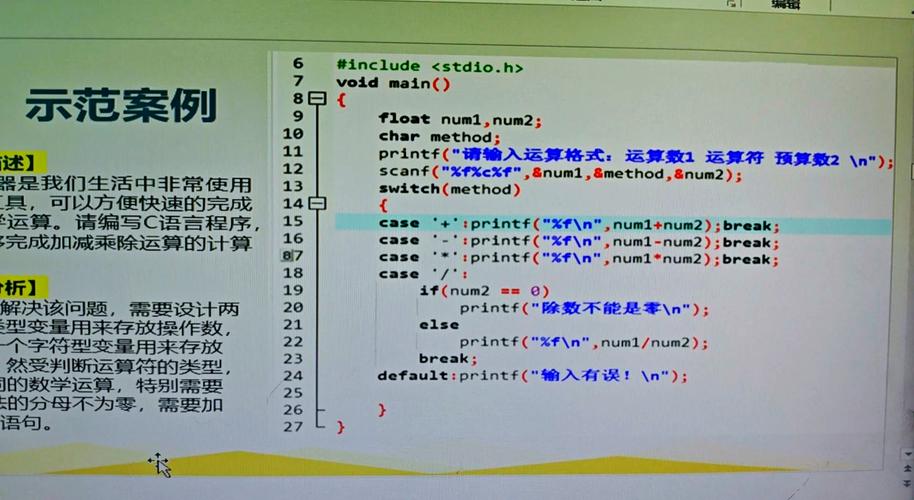
Let's break down Java, Python, and C by comparing them across several key dimensions.
Quick Summary: Which One Should You Choose?
- Choose Python if: You are a beginner, want to get results quickly, and are interested in Data Science, AI, Web Development (backend), or Scripting. It's the king of readability and versatility.
- Choose Java if: You want to build large-scale, enterprise-level applications, especially for the Android ecosystem or big backend systems. It's known for its stability and "write once, run anywhere" philosophy.
- Choose C if: You need to work with system-level software, want to understand how computers really work at a low level, or need to achieve maximum performance (e.g., game engines, operating systems). It's more complex but gives you ultimate control.
Detailed Comparison Table
| Feature | Python | Java | C |
|---|---|---|---|
| Primary Use Cases | Data Science, AI/ML, Web Dev (Django/Flask), Scripting, Automation, Prototyping | Enterprise Apps, Android Apps, Big Data (Hadoop/Spark), Web Backends (Spring) | Operating Systems, Embedded Systems, Game Engines, Compilers, High-Performance Software |
| Performance | Slower. Interpreted language with Global Interpreter Lock (GIL). | Fast. Compiled to bytecode, runs on a fast Virtual Machine (JVM). | Fastest. Compiled directly to machine code, giving you bare-metal speed. |
| Learning Curve | Easiest. Simple, readable syntax. Great for beginners. | Moderate. More verbose syntax than Python. Requires understanding of OOP concepts. | Hardest. Low-level, manual memory management, complex syntax. Steep learning curve. |
| Speed of Development | Fastest. Concise code means you can build things quickly. | Moderate. More boilerplate code (e.g., public static void main) slows you down. |
Slowest. You have to manage everything yourself, leading to longer development times. |
| Memory Management | Automatic. Garbage Collector handles it for you. | Automatic. Garbage Collector on the JVM handles it. | Manual. You must explicitly allocate and deallocate memory using malloc() and free(). This is powerful but error-prone (leads to memory leaks). |
| Typing | Dynamic. Variables are not declared with a type. Can lead to runtime errors. | Static. Variables must be declared with a type. Catches errors at compile time. | Static. Variables must be declared with a type. Very strict. |
| Platform Independence | Excellent. Runs anywhere Python is installed. | Excellent. "Write Once, Run Anywhere" (WORA) with the JVM. | Poor. Code must be recompiled for each different operating system (Windows, macOS, Linux). |
| Community & Ecosystem | Massive. Huge libraries for everything (NumPy, Pandas, TensorFlow, Django). | Massive. Huge standard library and a vast ecosystem (Spring, Maven, Hibernate). | Large, but niche. Focused on systems programming. Not as many high-level libraries. |
In-Depth Look at Each Language
Python: The Swiss Army Knife
Python is designed to be highly readable and efficient. Its philosophy emphasizes code readability with its notable use of significant whitespace.
-
Strengths:
- Beginner-Friendly: The syntax is clean and looks almost like pseudocode. This lets you focus on programming concepts rather than complex language rules.
- Huge Ecosystem: The Python Package Index (PyPI) has hundreds of thousands of libraries. Whatever you want to do, there's probably a library for it.
- Versatility: It's a true general-purpose language used in web development, data science, artificial intelligence, scientific computing, and automation.
- Rapid Development: You can build a functional prototype or script in a fraction of the time it would take in other languages.
-
Weaknesses:
 (图片来源网络,侵删)
- Slower Performance: Being an interpreted language makes it slower than compiled languages like C or Java. The GIL also prevents true parallel execution on multi-core processors for CPU-bound tasks.
- High Memory Consumption: Dynamic typing and the flexibility of the language can lead to higher memory usage.
Best for: Beginners, data scientists, AI/ML engineers, web developers, and anyone who values speed of development over raw performance.
Java: The Enterprise Workhorse
Java is a class-based, object-oriented language designed to have as few implementation dependencies as possible. It's famous for its "write once, run anywhere" capability.
-
Strengths:
- Portability: The Java Virtual Machine (JVM) is a cornerstone of modern computing. You can compile your Java code once and run it on any device that has a JVM.
- Robustness & Stability: Strong typing and a static compiler catch many errors before the program is even run. It's designed for building large, reliable, and long-lasting applications.
- Excellent Performance: The JVM is highly optimized, with Just-In-Time (JIT) compilation that can make Java code run almost as fast as C/C++ in many scenarios.
- Massive Ecosystem: Frameworks like Spring Boot dominate the enterprise backend world. Tools like Maven and Gradle for project management are industry standards.
-
Weaknesses:
 (图片来源网络,侵删)
- Verbosity: Java code can be very wordy. A simple task might require writing a lot more boilerplate code than in Python.
- Slower Start: Setting up a project and writing the "Hello, World" program is more complex in Java than in Python.
Best for: Building large-scale enterprise applications, Android mobile apps, and high-performance backend systems.
C: The Foundation of Programming
C is a general-purpose, procedural programming language that provides low-level access to memory. It's one of the oldest and most influential programming languages, and many modern languages (including Java, Python, and C#) are implemented in C.
-
Strengths:
- Unmatched Performance: C gives you direct control over memory and hardware, allowing you to create the fastest possible software.
- Portability at the Source Level: While you have to recompile for different OSes, the source code is highly portable. If you write clean C code, it can be easily adapted.
- Foundation of Programming: Learning C forces you to understand core computer science concepts like memory management, pointers, and compilation, which will make you a better programmer in any language.
- Ubiquitous: It's used in operating systems, kernels, device drivers, and embedded systems where performance and direct hardware access are critical.
-
Weaknesses:
- Complex and Unsafe: Manual memory management is powerful but dangerous. It's very easy to introduce bugs like memory leaks and segmentation faults.
- Steep Learning Curve: Concepts like pointers and manual memory allocation are difficult for beginners to grasp.
- No Modern Features: Lacks many high-level features found in Java and Python, such as object-oriented programming (though you can simulate it) and a rich standard library for complex tasks.
Best for: Systems programming, operating systems, embedded systems, game engines, and performance-critical applications. Also for learning the fundamentals of how computers work.
Final Recommendation
- For a beginner: Start with Python. It will teach you programming logic without the frustration of complex syntax or memory management.
- For a career in mobile apps or big business: Java is a fantastic choice. It's a skill that is consistently in high demand.
- To understand computers at a deep level or build performance-critical software: C is the way to go, but be prepared for a challenge.
Ultimately, the best language is the one that helps you achieve your goals. The good news is that once you learn one, picking up the others becomes much easier