Of course! Converting code from C to Java involves more than just syntax changes. It's about translating the core programming paradigms of C (procedural, manual memory management) into Java's object-oriented, garbage-collected world.
Here’s a comprehensive guide covering the key differences, a step-by-step conversion process, a full code example, and popular tools to help you.
Key Differences Between C and Java
This is the most important part. You can't just do a find-and-replace. You need to understand these fundamental shifts.
| Feature | C | Java |
|---|---|---|
| Paradigm | Procedural (functions operating on data). | Object-Oriented (everything is inside a class). |
| Entry Point | int main(int argc, char *argv[]) |
public static void main(String[] args) |
| Memory Mgmt | Manual (malloc, calloc, free). Prone to leaks. |
Automatic Garbage Collection. No manual free(). |
| Compilation | Compiled to native machine code. | Compiled to bytecode, run on the Java Virtual Machine (JVM). |
| Data Types | Primitive types (int, char, float). Pointers (). |
Primitive types (int, char, float). References (similar to pointers, but no pointer arithmetic). |
| Strings | Character arrays (char str[]). Null-terminated. |
String object, immutable. StringBuilder for modification. |
| I/O | stdio.h library (printf, scanf, fopen). |
java.io and java.nio packages (System.out.println, Scanner, FileReader). |
| No Header Files | Relies on .h files for function/struct declarations. |
No header files. Classes contain their own methods and data. |
| Error Handling | Integer return codes (e.g., 0 for success). |
Exceptions (try-catch-finally blocks). |
Step-by-Step Conversion Guide
Let's walk through the process of converting a simple C program to Java.
Step 1: Structure and Entry Point
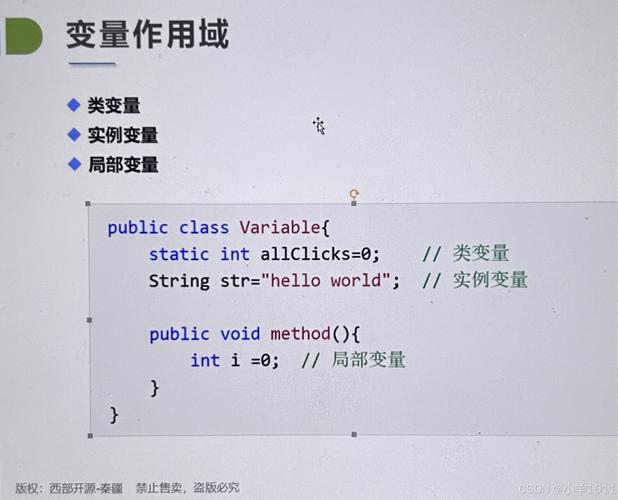
A C program starts with main. A Java program starts with a class that contains a main method.
C Code (hello.c):
#include <stdio.h>
// A simple function
void sayHello() {
    printf("Hello from a C function!\n");
}
// The main entry point
int main() {
    printf("Hello, C World!\n");
    sayHello();
    return 0;
}
Java Conversion:
- Create a class. The class name usually matches the file name.
- Move the
mainfunction inside the class. - Change the signature of
maintopublic static void main(String[] args). - The
mainmethod is the entry point. Other methods must be inside a class.
Java Code (HelloWorld.java):
public class HelloWorld {
    // A simple method (must be inside a class)
    public static void sayHello() {
        System.out.println("Hello from a Java method!");
    }
    // The main entry point
    public static void main(String[] args) {
        System.out.println("Hello, Java World!");
        sayHello();
    }
}
Step 2: Data Types and Pointers
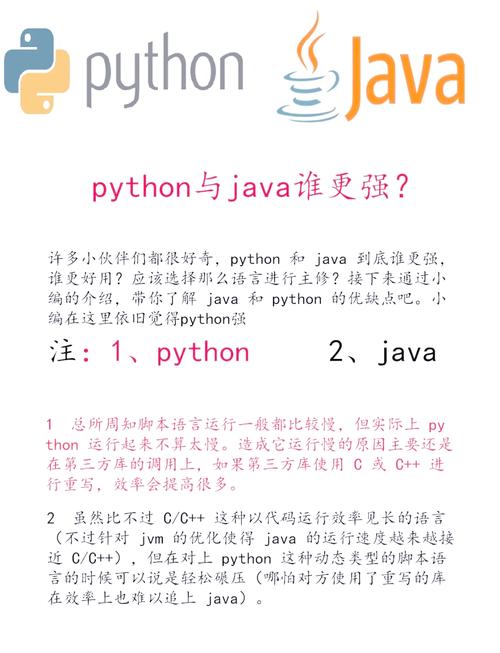
This is a critical step. C pointers are used for everything: dynamic memory, passing arrays to functions, and creating complex data structures. Java uses references.
C Code (pointers.c):
#include <stdio.h>
#include <stdlib.h>
int main() {
    int x = 10;
    int *ptr = &x; // ptr is a pointer to an integer
    printf("Value of x: %d\n", x);
    printf("Value at ptr: %d\n", *ptr); // Dereference the pointer
    // Dynamic memory allocation
    int *arr = (int*) malloc(5 * sizeof(int));
    if (arr != NULL) {
        arr[0] = 100;
        printf("First element of dynamic array: %d\n", arr[0]);
        free(arr); // Manually free memory
    }
    return 0;
}
Java Conversion:
int *ptrbecomes a simple reference type. You don't need the&(address-of) or (dereference) operators in the same way.- The concept of a pointer to a primitive is replaced by the primitive itself. You pass values directly.
- Dynamic arrays are handled by the
newkeyword, and memory is automatically managed by the garbage collector. You never usefree()ordeletein Java.
Java Code (ReferencesDemo.java):
public class ReferencesDemo {
    public static void main(String[] args) {
        int x = 10;
        // No '&' operator. 'x' is passed by value.
        // There is no concept of a pointer to a primitive in the same C way.
        System.out.println("Value of x: " + x);
        // Dynamic array creation. Memory is managed by the JVM.
        int[] arr = new int[5];
        arr[0] = 100;
        System.out.println("First element of dynamic array: " + arr[0]);
        // No 'free()' needed! The garbage collector will clean this up.
    }
}
Step 3: Strings
C uses character arrays. Java has a dedicated, powerful String class.
C Code (strings.c):
#include <stdio.h>
#include <string.h>
int main() {
    char str1[] = "Hello";
    char str2[50];
    strcpy(str2, str1); // Copy str1 to str2
    printf("Copied string: %s\n", str2);
    if (strcmp(str1, "Hello") == 0) {
        printf("Strings are equal.\n");
    }
    return 0;
}
Java Conversion:
- Use the
Stringclass. - Use for concatenation.
- Use built-in methods like
.equals()for comparison and.substring(), etc., for manipulation. Remember,Strings are immutable.
Java Code (StringsDemo.java):
public class StringsDemo {
    public static void main(String[] args) {
        String str1 = "Hello";
        String str2 = new String("Hello"); // Also valid, but the first way is more common
        // Concatenation is easy with '+'
        String str3 = str1 + ", World!";
        System.out.println("Concatenated string: " + str3);
        // Use .equals() for content comparison. '==' checks for reference equality.
        if (str1.equals("Hello")) {
            System.out.println("Strings are equal.\n");
        }
        // No strcpy, just direct assignment
        String anotherStr = str1;
        System.out.println("Copied string: " + anotherStr);
    }
}
Step 4: Structs and Classes
C uses struct to group data. Java uses class (or interface) to group data and methods.
C Code (structs.c):
#include <stdio.h>
#include <string.h>
// A C struct
struct Person {
    char name[50];
    int age;
};
void printPerson(struct Person p) {
    printf("Name: %s, Age: %d\n", p.name, p.age);
}
int main() {
    struct Person person1;
    strcpy(person1.name, "Alice");
    person1.age = 30;
    printPerson(person1);
    return 0;
}
Java Conversion:
- Replace
structwithclass. - Make member variables
privatefor encapsulation. - Add a
publicconstructor to initialize the object. - Add
public"getter" and "setter" methods to access and modify the private data. - Methods are now part of the class that operates on its data.
Java Code (Person.java):
// A Java class
public class Person {
    // Private member variables (fields)
    private String name;
    private int age;
    // Public constructor to create an instance of the class
    public Person(String name, int age) {
        this.name = name; // 'this.name' refers to the class field
        this.age = age;
    }
    // Public "getter" method for name
    public String getName() {
        return this.name;
    }
    // Public "getter" method for age
    public int getAge() {
        return this.age;
    }
    // Public method to print person details
    public void printPerson() {
        System.out.println("Name: " + this.name + ", Age: " + this.age);
    }
    public static void main(String[] args) {
        // Create an instance (object) of the Person class
        Person person1 = new Person("Alice", 30);
        // Call methods on the object
        person1.printPerson();
System.out.println("Access