Of course! The finally block in Java is a crucial concept, and its interaction with the return statement is a classic and often misunderstood topic.
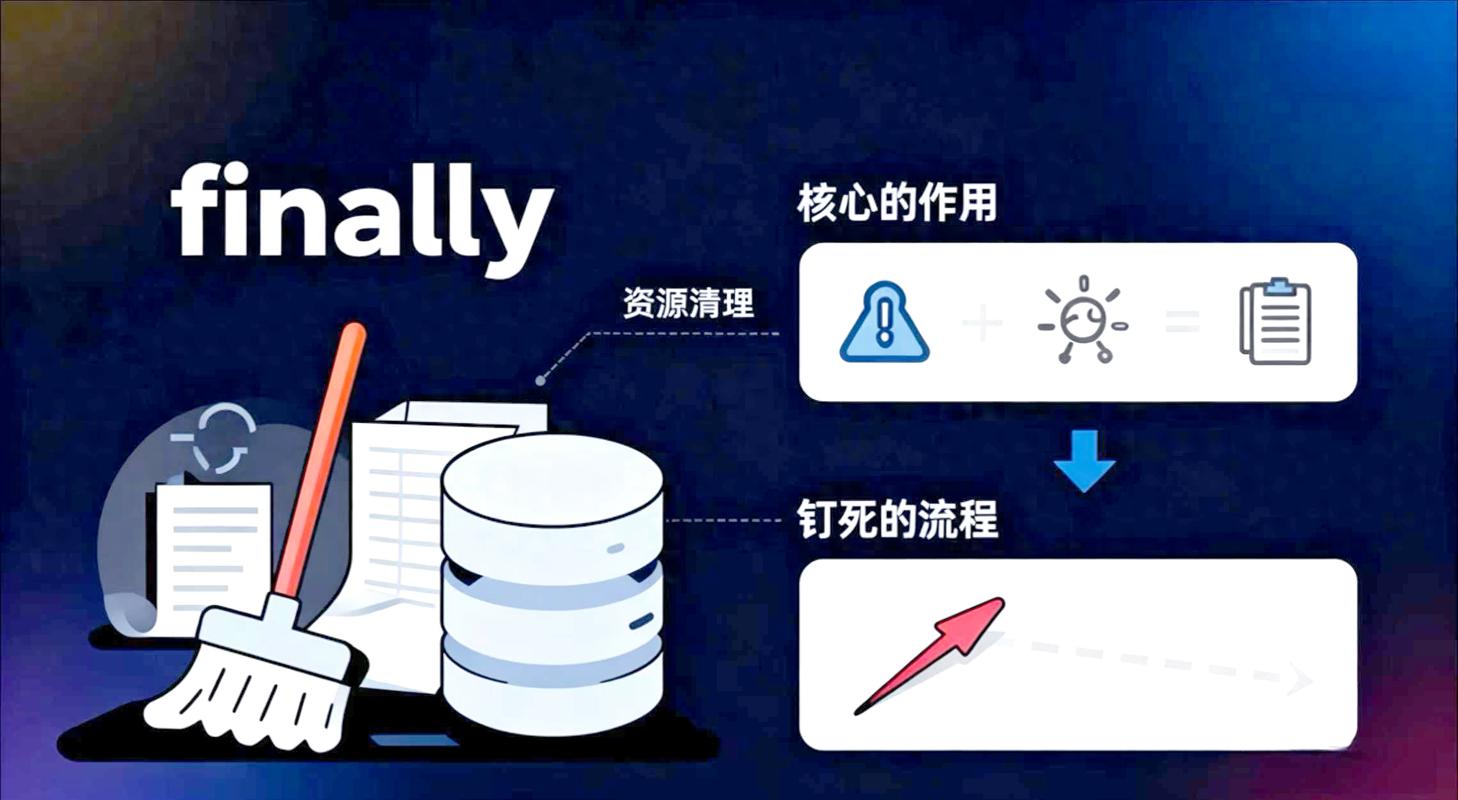
Let's break it down, from the basic concept to the detailed rules and edge cases.
The Basic Purpose of finally
The finally block is used to execute code regardless of whether an exception was thrown or caught in a try or catch block. It's primarily used for:
- Resource Cleanup: Closing database connections, file handles, or network sockets.
- Logging: Logging the completion of an operation, whether it succeeded or failed.
- State Reset: Resetting an object to a valid state.
A try block can be followed by one or more catch blocks, or by a finally block, or by one or more catch blocks and a finally block.
try {
    // Code that might throw an exception
} catch (SpecificException e) {
    // Handle the specific exception
} finally {
    // This code ALWAYS runs
}
The Core Interaction: return and finally
This is where it gets interesting. The key rule to remember is:
If a
tryorcatchblock executes areturnstatement, thefinallyblock will still execute before the method actually returns a value to its caller.
Let's see this in action with a simple example.
Example 1: return in try block
public class FinallyExample {
    public static int getValue() {
        try {
            System.out.println("Inside try block.");
            return 10; // The method is preparing to return 10
        } finally {
            System.out.println("Inside finally block.");
        }
        // This line is unreachable and will not compile
        // System.out.println("This will never be printed.");
    }
    public static void main(String[] args) {
        int result = getValue();
        System.out.println("Method returned: " + result);
    }
}
Output:
Inside try block.
Inside finally block.
Method returned: 10
What Happens Step-by-Step:
getValue()is called.- The code inside the
tryblock executes. return 10;is encountered. The JVM "commits" to returning the value10but does not immediately exit the method.- The
finallyblock is executed. "Inside finally block." is printed. - After the
finallyblock completes, the method officially returns the value10to themainmethod. - The
mainmethod then prints the result.
The Crucial Nuance: Modifying the Return Value
This is the most important and tricky part. What happens if the finally block also contains a return statement?
The finally block's return statement overrides the return statement from the try or catch block.
The value returned by the method will be the one from the finally block.
Example 2: return in both try and finally
public class FinallyOverrideExample {
    public static int getValue() {
        try {
            System.out.println("Inside try block.");
            return 10; // This return value is about to be forgotten
        } finally {
            System.out.println("Inside finally block.");
            return 20; // This return value wins!
        }
    }
    public static void main(String[] args) {
        int result = getValue();
        System.out.println("Method returned: " + result); // Prints 20, not 10!
    }
}
Output:
Inside try block.
Inside finally block.
Method returned: 20
What Happens Step-by-Step:
getValue()is called.- The
tryblock executes.return 10;is prepared. - The
finallyblock executes. It prints its message. - The
finallyblock encounters its ownreturn 20;. - This new return value (
20) replaces the previously prepared value (10). - The method exits and returns
20to the caller.
Warning: This behavior is generally considered bad practice. It makes the code very difficult to read and debug. A reader of the try block would expect the method to return 10, but the actual return value is hidden in the finally block. It's better to avoid putting a return statement in a finally block unless you have a very specific and unusual reason.
Interaction with Exceptions
The same rules apply when an exception is thrown.
Example 3: Exception thrown, finally runs, then method exits
public class FinallyWithException {
    public static void performOperation() {
        try {
            System.out.println("Inside try block.");
            throw new RuntimeException("Something went wrong!");
        } catch (Exception e) {
            System.out.println("Exception caught: " + e.getMessage());
        } finally {
            System.out.println("Inside finally block. Cleaning up...");
        }
        System.out.println("This line will run because the exception was caught.");
    }
    public static void main(String[] args) {
        performOperation();
    }
}
Output:
Inside try block.
Exception caught: Something went wrong!
Inside finally block. Cleaning up...
This line will run because the exception was caught.
Example 4: Exception thrown, finally runs, then exception re-thrown
If the exception is not caught, or if a catch block re-throws it, the finally block still runs first.
public class FinallyWithUncaughtException {
    public static void performOperation() {
        try {
            System.out.println("Inside try block.");
            throw new RuntimeException("Something went wrong!");
        } finally {
            System.out.println("Inside finally block. Cleaning up before exit.");
        }
        // This line is unreachable
        System.out.println("This will never be printed.");
    }
    public static void main(String[] args) {
        try {
            performOperation();
        } catch (RuntimeException e) {
            System.out.println("Exception in main: " + e.getMessage());
        }
    }
}
Output:
Inside try block.
Inside finally block. Cleaning up before exit.
Exception in main: Something went wrong!
What Happens Step-by-Step:
performOperation()is called.- The
tryblock throws aRuntimeException. - There is no matching
catchblock, so the exception propagates out of thetryblock. - Before the exception propagates, the
finallyblock is executed. It prints its message. - After the
finallyblock completes, theRuntimeExceptioncontinues to propagate up the call stack to themainmethod. - The
mainmethod catches and prints the exception.
Edge Cases and Important Details
return with a value vs. return without a value (for void methods)
The rules are the same. If a void method has a return in a try block, the finally block will still execute before the method truly returns.
System.exit()
The finally block will NOT execute if System.exit() is called within the try or catch block. System.exit() shuts down the JVM immediately, bypassing all normal cleanup.
public class FinallyWithSystemExit {
    public static void main(String[] args) {
        try {
            System.out.println("Inside try block.");
            System.exit(0); // JVM shuts down here
        } finally {
            System.out.println("This will NEVER be printed.");
        }
    }
}
Output:
Inside try block.finally with no try block?
No, a finally block must be associated with a try block. The syntax is try...catch...finally or try...finally.
Summary Table
| Scenario | Does finally Execute? |
What is the final return value? |
|---|---|---|
try has return, no exception |
Yes | The value from the try block's return. |
try throws exception, caught by catch |
Yes | N/A (method continues unless catch has a return). |
try throws exception, catch has return |
Yes | The value from the catch block's return. |
try has return, finally has return |
Yes | The value from the finally block's return (overrides). |
try throws exception, finally has return |
Yes | The value from the finally block's return. Exception is lost. |
try or catch calls ` |