在 Python 中,使用正则表达式匹配第一个符合条件的子字符串,可以通过以下几种方法实现:
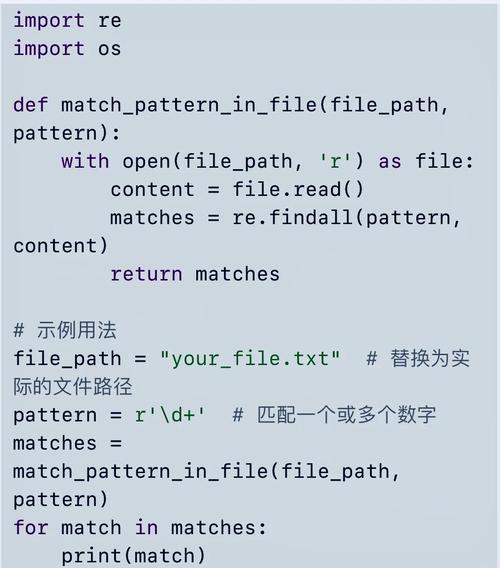
(图片来源网络,侵删)
方法 1:使用 re.search()(推荐)
re.search() 会返回第一个匹配到的结果(Match 对象),如果没有匹配则返回 None。
import re
text = "apple banana orange apple"
pattern = r"apple"
match = re.search(pattern, text)
if match:
    print("第一个匹配的子字符串:", match.group())  # 输出: apple
else:
    print("未找到匹配项")
说明
match.group()返回匹配到的完整字符串。- 如果需要匹配的位置或更多详细信息,可以使用
match.start()和match.end()。
方法 2:使用 re.match()
re.match() 只从字符串的开头匹配,如果开头不匹配则直接返回 None,适用于检查字符串是否以特定模式开头。
import re
text = "apple banana orange"
pattern = r"apple"
match = re.match(pattern, text)
if match:
    print("匹配成功:", match.group())  # 输出: apple
else:
    print("未匹配")
注意
- 如果字符串开头不匹配,即使中间有符合条件的子字符串,
re.match()也不会返回结果。
方法 3:使用 re.findall() 并取第一个元素
re.findall() 返回所有匹配的子字符串列表,可以通过索引 [0] 获取第一个匹配项。
import re
text = "apple banana orange apple"
pattern = r"apple"
matches = re.findall(pattern, text)
if matches:
    print("第一个匹配的子字符串:", matches[0])  # 输出: apple
else:
    print("未找到匹配项")
适用场景
- 需要获取所有匹配项,但只取第一个时。
方法 4:使用 re.finditer() 并取第一个
re.finditer() 返回一个迭代器,可以逐个访问匹配项,取第一个匹配项时,可以直接用 next() 或遍历。
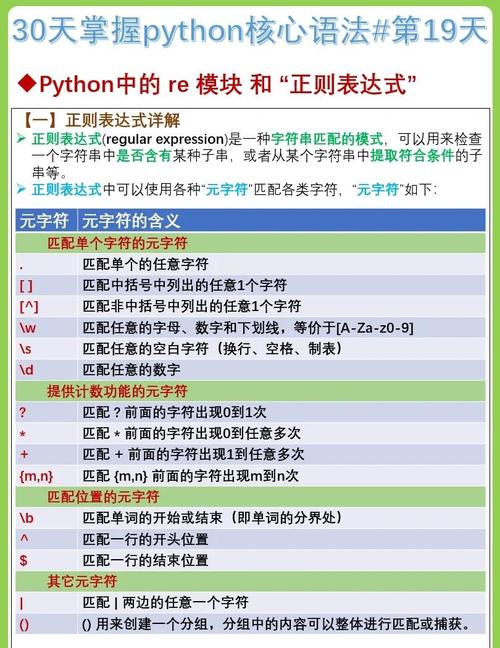
(图片来源网络,侵删)
import re
text = "apple banana orange apple"
pattern = r"apple"
match_iter = re.finditer(pattern, text)
first_match = next(match_iter, None)  # 取第一个匹配项,无则返回 None
if first_match:
    print("第一个匹配的子字符串:", first_match.group())  # 输出: apple
else:
    print("未找到匹配项")
适用场景
- 需要遍历所有匹配项,但只想取第一个时。
| 方法 | 特点 | 适用场景 |
|---|---|---|
re.search() |
从字符串任意位置匹配第一个结果 | 推荐,通用场景 |
re.match() |
只从字符串开头匹配 | 检查字符串是否以特定模式开头 |
re.findall() + [0] |
获取所有匹配项后取第一个 | 需要所有匹配项但只取第一个 |
re.finditer() + next() |
迭代器方式取第一个 | 需要遍历匹配项但只取第一个 |
推荐使用 re.search(),因为它简洁且符合“匹配第一个”的直观需求。
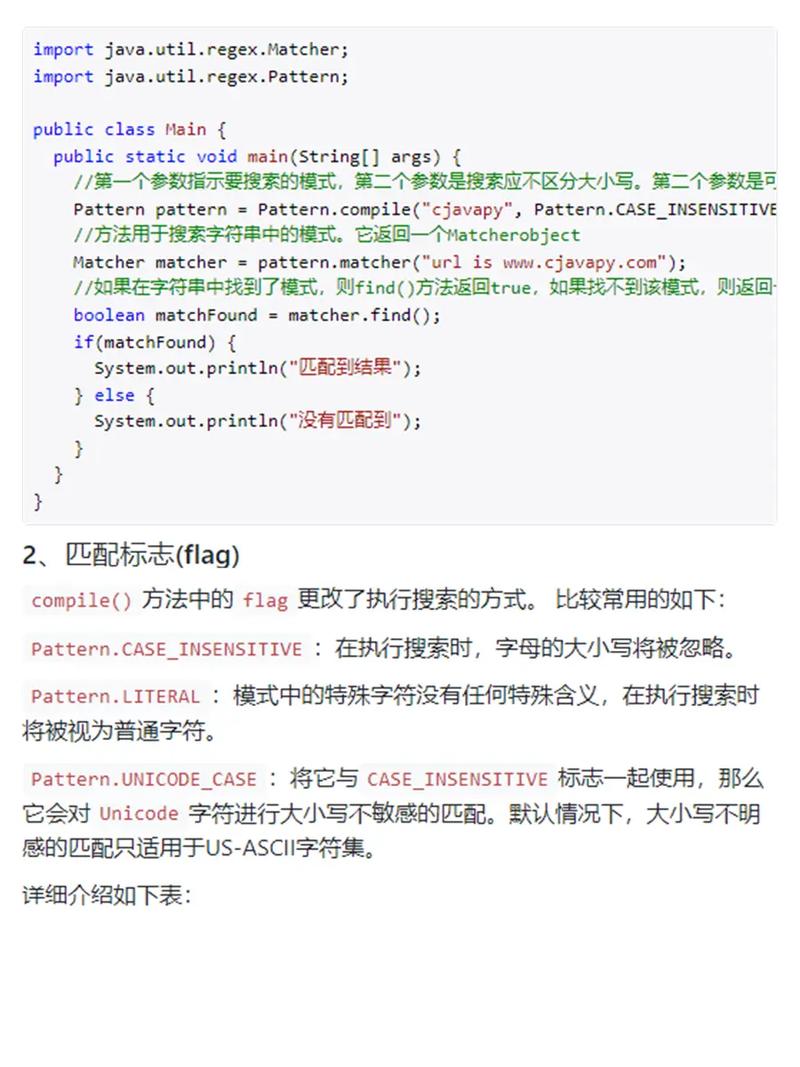
(图片来源网络,侵删)