Of course! Here is a comprehensive guide to handling POST requests in Java Servlets, covering the core concepts, a complete example, best practices, and modern alternatives.
The Core Concept: GET vs. POST
Before diving into the code, it's crucial to understand the difference between GET and POST requests, as this determines when and how you should use them.
| Feature | GET Request | POST Request |
|---|---|---|
| Purpose | Retrieve data from the server. | Send data to the server to create/update a resource. |
| Data in URL | Data is sent in the URL query string (e.g., .../search?q=java). |
Data is sent in the HTTP request body, which is invisible to the user. |
| Data Size | Limited by URL length (around 2048 characters). | Can be much larger, as it's not restricted by URL length. |
| Security | Less secure. Sensitive data (like passwords) can be logged in browser history, server logs, etc. | More secure. Data is in the body, not the URL. (Note: This is not encryption, just not visible in the URL). |
| Idempotency | Idempotent. Making the same request multiple times has the same effect as making it once. | Not idempotent. Submitting a form multiple times can create multiple records. |
| Common Use | Searching, viewing a page, filtering a list. | Submitting login forms, registration forms, uploading files. |
For any operation that changes data on the server (like creating a user, posting a comment, or uploading a file), you should always use a POST request.
The Servlet doPost() Method
In a Java Servlet, you handle a POST request by overriding the doPost() method in your servlet class. This method is called by the servlet container (like Tomcat) when a POST request is made to the servlet's URL.
The method signature is:
protected void doPost(HttpServletRequest request, HttpServletResponse response)
      throws ServletException, IOException {
    // Your code to handle the POST request goes here
}
HttpServletRequest request: This object contains all the information about the incoming request, including headers, parameters, and the request body.HttpServletResponse response: This object is used to construct and send the response back to the client (e.g., a success page, a redirect, or an error message).
Complete Example: A Simple Registration Form
Let's build a classic example: a registration form that submits user data to a servlet.
Step 1: The HTML Form (register.html)
This form uses the POST method and sends its data to the RegisterServlet. The action attribute points to the URL pattern of our servlet.
<!DOCTYPE html>
<html>
<head>Registration Form</title>
</head>
<body>
    <h1>User Registration</h1>
    <form action="register" method="POST">
        <label for="username">Username:</label><br>
        <input type="text" id="username" name="username" required><br><br>
        <label for="email">Email:</label><br>
        <input type="email" id="email" name="email" required><br><br>
        <label for="password">Password:</label><br>
        <input type="password" id="password" name="password" required><br><br>
        <input type="submit" value="Register">
    </form>
</body>
</html>
Key Points:
method="POST": This tells the browser to send the data using the HTTP POST method.name="username",name="email",name="password": Thesenameattributes are critical. They become the "parameter names" that the servlet will use to retrieve the data.
Step 2: The Java Servlet (RegisterServlet.java)
This servlet will receive the POST data, process it, and send a response.

import java.io.IOException;
import java.io.PrintWriter;
import javax.servlet.ServletException;
import javax.servlet.annotation.WebServlet;
import javax.servlet.http.HttpServlet;
import javax.servlet.http.HttpServletRequest;
import javax.servlet.http.HttpServletResponse;
// The @WebServlet annotation maps this servlet to the URL "/register"
@WebServlet("/register")
public class RegisterServlet extends HttpServlet {
    private static final long serialVersionUID = 1L;
    // This method handles POST requests
    protected void doPost(HttpServletRequest request, HttpServletResponse response)
            throws ServletException, IOException {
        // 1. Set the response content type to HTML
        response.setContentType("text/html;charset=UTF-8");
        PrintWriter out = response.getWriter();
        // 2. Get form parameters from the request
        // request.getParameter() retrieves the value of a form input field
        String username = request.getParameter("username");
        String email = request.getParameter("email");
        String password = request.getParameter("password");
        // 3. (Optional) Basic validation
        if (username == null || username.isEmpty() || email == null || email.isEmpty() || password == null || password.isEmpty()) {
            out.println("<h1>Error</h1>");
            out.println("<p>All fields are required!</p>");
            out.println("<a href='register.html'>Go back</a>");
            return; // Stop processing
        }
        // 4. Process the data (In a real app, you would save this to a database)
        // For this example, we'll just print it to the console and show a success message.
        System.out.println("New user registered:");
        System.out.println("Username: " + username);
        System.out.println("Email: " + email);
        System.out.println("Password: " + password); // In a real app, NEVER log passwords!
        // 5. Send a response back to the client
        out.println("<!DOCTYPE html>");
        out.println("<html>");
        out.println("<head>");
        out.println("<title>Registration Successful</title>");
        out.println("</head>");
        out.println("<body>");
        out.println("<h1>Registration Successful!</h1>");
        out.println("<p>Welcome, " + username + "! Your account has been created.</p>");
        out.println("<p>Email: " + email + "</p>");
        out.println("</body>");
        out.println("</html>");
    }
}
Step 3: Deployment (web.xml - Optional with Annotations)
If you are not using annotations (like @WebServlet), you would configure the servlet in web.xml. However, modern Java web development strongly favors annotations for their simplicity.
With @WebServlet("/register"), the servlet is automatically mapped, and no web.xml configuration is needed for this mapping.
Best Practices and Important Considerations
a. Character Encoding
If you expect to receive non-ASCII characters (like accented letters or Chinese characters), you must set the character encoding of the request before you call request.getParameter(). Otherwise, you might get garbled text (mojibake).
// This should be the VERY FIRST line in your doPost method
request.setCharacterEncoding("UTF-8");
b. Security: Never Trust Client Input
User-submitted data is untrusted and potentially malicious.
-
Cross-Site Scripting (XSS): If you display user data directly back on a page, a malicious user could inject JavaScript.
-
Solution: Always escape HTML output. You can use a library like OWASP Java HTML Sanitizer or the built-in
org.apache.commons.text.StringEscapeUtils.import org.apache.commons.text.StringEscapeUtils; // ... String username = request.getParameter("username"); // Escape the output before printing it to the page out.println("<p>Welcome, " + StringEscapeUtils.escapeHtml4(username) + "!</p>");
-
-
SQL Injection: If you use user input to build a SQL query, you can be vulnerable.
- Solution: Always use Prepared Statements. Never concatenate user input directly into a SQL string.
c. Redirection vs. Forwarding
After processing a form, it's a common pattern to redirect to a new page (like a "Thank You" page) instead of writing the response directly in the servlet.
-
response.sendRedirect("success.html")(Redirection):- Sends a 302 status code to the browser, telling it to make a new GET request to the new URL.
- The URL in the browser's address bar changes.
- The original request and response objects are lost.
-
request.getRequestDispatcher("success.html").forward(request, response)(Forwarding):- The server internally forwards the request to another resource (servlet, JSP).
- The URL in the browser's address bar does not change.
- The original request and response objects are preserved.
For a POST request, redirection is often the preferred choice to prevent the user from accidentally resubmitting the form if they refresh the page.
// In your doPost method, after successful processing
response.sendRedirect("success.html"); // Redirect to a success page
Modern Alternatives to Servlets
While classic Servlets are fundamental to Java EE, modern web development often uses frameworks that simplify the process significantly.
-
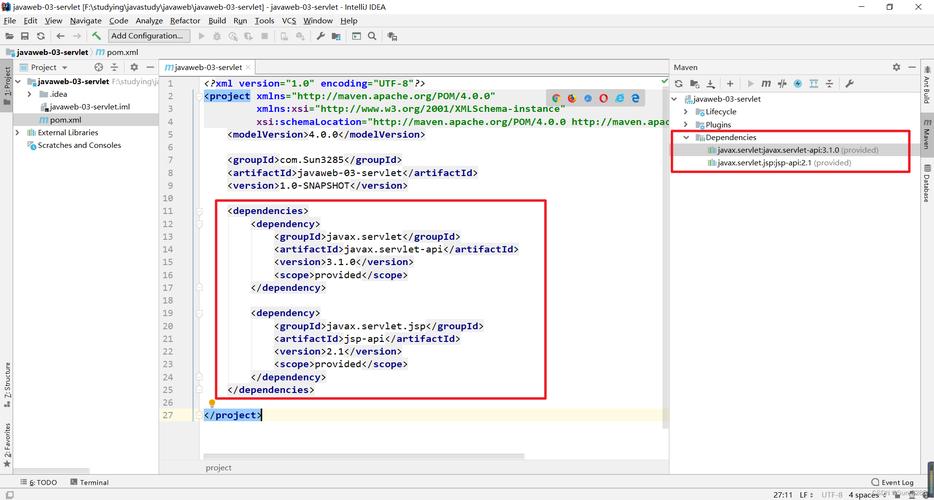
Jakarta Servlet (formerly Java EE Servlet): The modern, standardized version. If you're starting a new project today, use
jakarta.servletinstead ofjavax.servlet. -
Spring Boot: The dominant framework for building Java applications. It uses a front-controller pattern and annotation-based routing (
@RestController,@PostMapping), which is much cleaner for handling RESTful APIs.// Spring Boot example @RestController @RequestMapping("/api/users") public class UserController { @PostMapping("/register") public ResponseEntity<String> registerUser(@RequestBody UserRegistrationDto registrationDto) { // Logic to save user return ResponseEntity.ok("User registered successfully!"); } } -
Jakarta EE (formerly Java EE) / MicroProfile: For building larger, more traditional enterprise applications, these specifications provide a robust set of APIs, including modern Servlets, JPA, and more.
Summary
| Task | Classic Servlet API | Spring Boot (Modern) |
|---|---|---|
| Map URL | @WebServlet("/register") or web.xml |
@RestController + @PostMapping("/register") |
| Handle Method | Override doPost() |
Annotate a method with @PostMapping |
| Get Parameters | request.getParameter("name") |
@RequestParam("name") String name or @RequestBody for JSON |
| Send Response | PrintWriter out = response.getWriter(); out.println(...) |
return ResponseEntity.ok(...); or @ResponseBody |