Of course! The term "verify text" in Python can mean several different things, depending on the goal. Here’s a comprehensive guide covering the most common interpretations, from simple checks to advanced techniques.
We'll break it down into these categories:
- Basic Text Verification: Checking if a string meets certain criteria (e.g., contains a word, is a certain length).
- Advanced Text Verification: Checking for complex patterns (e.g., email, phone number format) using Regular Expressions.
- Semantic Text Verification: Checking if the meaning of two texts is similar (e.g., for chatbots or plagiarism detection).
- API-Based Verification: Verifying text using external services (e.g., spell checking, profanity filtering).
Basic Text Verification (String Methods)
This is the most fundamental approach, using Python's built-in string methods. It's great for simple checks.
Goal: Verify properties like content, length, or case.
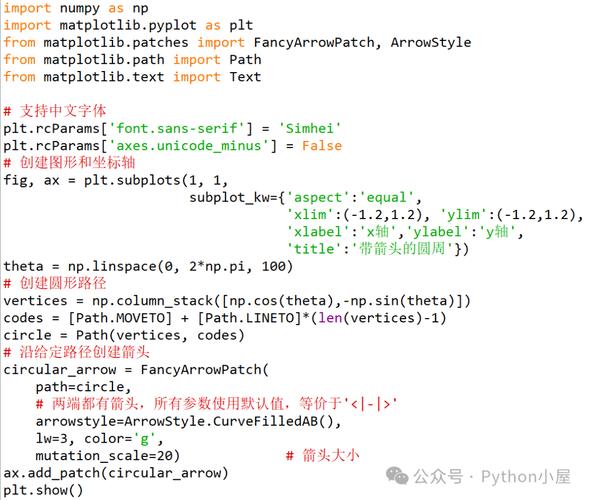
Example: User Input Validation Let's say we want to verify that a username is between 5 and 15 characters long, starts with a letter, and contains only letters and numbers.
username = "User123"
# 1. Verify length is between 5 and 15
is_valid_length = 5 <= len(username) <= 15
print(f"Is length valid? {is_valid_length}") # Output: Is length valid? True
# 2. Verify it starts with a letter
# isalpha() checks if all characters are alphabetic
starts_with_letter = username[0].isalpha()
print(f"Starts with a letter? {starts_with_letter}") # Output: Starts with a letter? True
# 3. Verify it contains only alphanumeric characters
# isalnum() checks if all characters are alphanumeric
is_alphanumeric = username.isalnum()
print(f"Is alphanumeric? {is_alphanumeric}") # Output: Is alphanumeric? True
# Combining all checks for a final verification
is_valid_username = is_valid_length and starts_with_letter and is_alphanumeric
print(f"Is the username valid? {is_valid_username}") # Output: Is the username valid? True
Common String Methods for Verification:
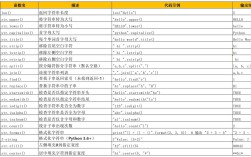
my_string.startswith("prefix"): Checks if the string starts with a specific substring.my_string.endswith("suffix"): Checks if the string ends with a specific substring.my_string in another_string: Checks for substring presence.my_string.isalpha(): Checks if all characters are alphabetic.my_string.isdigit(): Checks if all characters are digits.my_string.islower()/my_string.isupper(): Checks the case of the string.my_string.isspace(): Checks if all characters are whitespace.
Advanced Text Verification (Regular Expressions)
When you need to verify complex patterns (like email addresses, phone numbers, or specific formats), Regular Expressions (regex) are the standard tool.
Goal: Match a string against a defined pattern.
Example: Verifying an Email Address This is a classic use case. An email has a very specific structure.
import re
email = "test.user+alias@example.co.uk"
# The regex pattern for a basic email
# [a-zA-Z0-9_.+-]+: One or more word characters, dots, pluses, or hyphens.
# @: The literal "@" symbol.
# [a-zA-Z0-9-]+: One or more word characters or hyphens.
# \.: A literal dot (escaped with \)
# [a-zA-Z0-9-.]+: One or more word characters, dots, or hyphens.
pattern = r"^[a-zA-Z0-9_.+-]+@[a-zA-Z0-9-]+\.[a-zA-Z0-9-.]+$"
# re.match checks for a match only at the beginning of the string
# We use ^ and $ to ensure the entire string matches the pattern
if re.match(pattern, email):
    print(f"'{email}' is a valid email address.")
else:
    print(f"'{email}' is NOT a valid email address.")
# A more robust, though still simplified, pattern
robust_pattern = r"^[a-zA-Z0-9_.+-]+@[a-zA-Z0-9-]+\.[a-zA-Z0-9-.]+\.[a-zA-Z0-9-.]+$" # Added another part for .co.uk
# This robust pattern would fail the example email, showing how complex regex can get.
# For real applications, use a well-tested library like `email-validator`.
How to use Regex:
- Import the module:
import re - Define the pattern: Use a raw string
r"..."for your regex. - Use a function:
re.match(pattern, text): Checks for a match only at the beginning of the string.re.search(pattern, text): Checks for a match anywhere in the string.re.fullmatch(pattern, text): Checks if the entire string matches the pattern (often the best choice for verification).
Semantic Text Verification (Meaning Similarity)
This is a more advanced, AI-powered approach. It's not about the words themselves, but whether they convey the same meaning.
Goal: Check if two sentences or paragraphs have similar meanings.
Example: Checking if a user's question matches a FAQ entry
We can use pre-trained language models from libraries like sentence-transformers.
First, you need to install the library:
pip install sentence-transformers
Code Example:
from sentence_transformers import SentenceTransformer, util
# Load a pre-trained model that is good at understanding sentence meaning
model = SentenceTransformer('all-MiniLM-L6-v2')
# Define the texts you want to compare
faq_answer = "Our customer support team is available 24/7 via phone and email."
user_question_1 = "When can I contact support?"
user_question_2 = "What is the price of your premium plan?"
user_question_3 = "How do I get in touch with your support team?"
# Encode the sentences into numerical vectors (embeddings)
embedding_faq = model.encode(faq_answer, convert_to_tensor=True)
embedding_q1 = model.encode(user_question_1, convert_to_tensor=True)
embedding_q2 = model.encode(user_question_2, convert_to_tensor=True)
embedding_q3 = model.encode(user_question_3, convert_to_tensor=True)
# Calculate the cosine similarity between the FAQ answer and each question
# Cosine similarity ranges from -1 to 1, where 1 means identical meaning.
similarity_1 = util.cos_sim(embedding_faq, embedding_q1)
similarity_2 = util.cos_sim(embedding_faq, embedding_q2)
similarity_3 = util.cos_sim(embedding_faq, embedding_q3)
print(f"Similarity with 'When can I contact support?': {similarity_1.item():.4f}")
print(f"Similarity with 'What is the price of your premium plan?': {similarity_2.item():.4f}")
print(f"Similarity with 'How do I get in touch with your support team?': {similarity_3.item():.4f}")
# Verification Logic: Is the similarity above a certain threshold (e.g., 0.7)?
threshold = 0.7
is_similar_1 = similarity_1.item() > threshold
is_similar_2 = similarity_2.item() > threshold
is_similar_3 = similarity_3.item() > threshold
print("\n--- Verification Results ---")
print(f"Question 1 is similar to FAQ answer? {is_similar_1}") # Expected: True
print(f"Question 2 is similar to FAQ answer? {is_similar_2}") # Expected: False
print(f"Question 3 is similar to FAQ answer? {is_similar_3}") # Expected: True
API-Based Verification (External Services)
Sometimes, the best way to verify text is to use a specialized service via an API. This is common for spell checking, profanity filtering, or checking against known data breaches.
Goal: Use a third-party service to perform a complex verification task.
Example: Simple Spell Checking with the hunspell library
This library uses the powerful Hunspell spell engine.
First, install the library and its dictionary:
pip install pyhunspell
# You also need Hunspell dictionaries for your language.
# For English on Linux: sudo apt-get install hunspell-en-us
# For other systems, download .dic and .aff files.
Code Example:
import hunspell
# Initialize the Hunspell checker
# You need to provide the path to the dictionary files
# On Linux, it might be '/usr/share/hunspell/en_US'
# On Windows, you might need to download them and provide the full path.
try:
    # This path is a common one for Linux systems
    h = hunspell.HunSpell('/usr/share/hunspell/en_US.dic', '/usr/share/hunspell/en_US.aff')
except:
    print("Hunspell dictionary not found. Please install it and provide the correct path.")
    exit()
text_to_verify = "This is a sentance with a speling error."
correct_text = "This is a sentence with a spelling error."
# Check if a word is spelled correctly
print(f"Is 'sentance' correct? {h.spell('sentance')}") # Output: False
print(f"Is 'sentence' correct? {h.spell('sentence')}") # Output: True
# Get suggestions for a misspelled word
suggestions = h.suggest('speling')
print(f"Suggestions for 'speling': {suggestions}") # Output: ['spelling', 'spieling', 'speeling']
# You can loop through a text to verify all words
words = text_to_verify.split()
misspelled_words = [word for word in words if not h.spell(word)]
print(f"\nMisspelled words in '{text_to_verify}': {misspelled_words}")
# Output: Misspelled words in 'This is a sentance with a speling error.': ['sentance', 'speling', 'error.']
Summary: Which Method to Choose?
| Goal | Best Method | Python Tools/Libraries |
|---|---|---|
| Check length, case, substring presence | Basic String Methods | len(), my_string.startswith(), in, etc. |
| Validate email, phone, zip code, custom format | Regular Expressions | re module |
| Check if two sentences mean the same thing | Semantic Verification | sentence-transformers, transformers (Hugging Face) |
| Check spelling, grammar, profanity | API-Based / Specialized Libraries | hunspell, language-tool-python, or external APIs |