Of course. Converting a double to a byte in Java is a common task that involves two distinct concepts: type casting and byte manipulation.
Let's break it down.
The Short Answer: Type Casting
The most direct way to convert a double to a byte is by using a cast (byte). This performs a narrowing primitive conversion, which truncates the decimal part and keeps only the integer part, which is then further narrowed to fit into a single byte.
public class DoubleToByte {
    public static void main(String[] args) {
        double myDouble = 98.75;
        byte myByte = (byte) myDouble;
        System.out.println("Original double: " + myDouble); // 98.75
        System.out.println("Converted byte:  " + myByte);   // 98
    }
}
Important: This method can lead to data loss. The fractional part (75 in the example above) is discarded. Furthermore, if the double value is outside the range of a byte (-128 to 127), the result will wrap around due to two's complement overflow.
The Detailed Explanation: Different Scenarios and Methods
The "best" method depends on what you actually want to achieve. Here are the common scenarios and how to handle them.

Scenario 1: You want the integer part of the double (Truncation)
This is what the simple cast (byte) does.
double value1 = 123.999;
double value2 = -45.1;
double value3 = 150.0; // Outside byte range
byte b1 = (byte) value1; // Becomes 123
byte b2 = (byte) value2; // Becomes -45
byte b3 = (byte) value3; // Becomes -106 (150 - 256 = -106)
System.out.println("(byte)123.999 -> " + b1);
System.out.println("(byte)-45.1   -> " + b2);
System.out.println("(byte)150.0   -> " + b3); // Watch out for overflow!
Scenario 2: You want to round the double first, then convert
If you want to round to the nearest integer before converting, you should use Math.round().
Math.round()returns alongfordoubleinputs.- You must cast the
longresult to anintfirst, then to abyte.
double value1 = 99.2;  // Should round to 99
double value2 = 99.6;  // Should round to 100
double value3 = 129.5; // Should round to 130 (still out of range)
// The correct, safe way to round and then cast
byte b1 = (byte) (int) Math.round(value1); // 99
byte b2 = (byte) (int) Math.round(value2); // 100
byte b3 = (byte) (int) Math.round(value3); // -126 (130 - 256 = -126)
System.out.println("Math.round(99.2)  -> " + b1);
System.out.println("Math.round(99.6)  -> " + b2);
System.out.println("Math.round(129.5) -> " + b3); // Still watch for overflow!
Scenario 3: You want to preserve the exact bit representation (Binary Conversion)
This is a completely different operation. Here, you are not converting the numeric value but the bit pattern of the double into a sequence of 8 bytes. This is often used for serialization, network protocols, or low-level data manipulation.
This is done using ByteBuffer from the java.nio package.
import java.nio.ByteBuffer;
public class DoubleToBytes {
    public static void main(String[] args) {
        double myDouble = 123.456;
        // Create a ByteBuffer with a capacity of 8 bytes (since a double is 64 bits)
        ByteBuffer buffer = ByteBuffer.allocate(8);
        // Put the double's value into the buffer using its native byte order
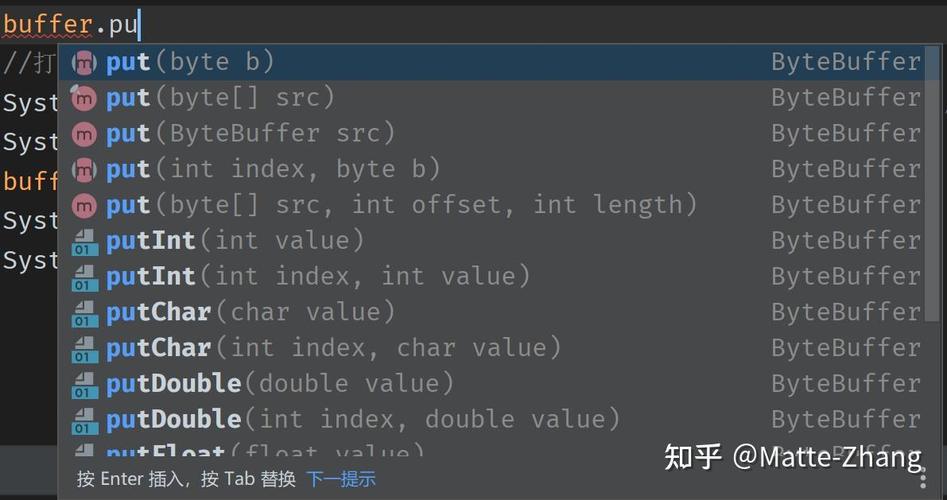
        buffer.putDouble(myDouble);
        // Get the byte array from the buffer
        byte[] byteArray = buffer.array();
        // The byte array now contains the 8 bytes representing the double
        System.out.println("Double value: " + myDouble);
        System.out.println("Byte array length: " + byteArray.length);
        System.out.println("Byte representation:");
        for (byte b : byteArray) {
            System.out.printf("%02X ", b); // Print as hexadecimal
        }
        System.out.println(); // New line
        // To convert back:
        double originalDouble = ByteBuffer.wrap(byteArray).getDouble();
        System.out.println("Converted back to double: " + originalDouble);
    }
}
Output will vary based on your system's Endianness (byte order):
Double value: 123.456
Byte array length: 8
Byte representation:
40 5E F1 3D 70 A3 D7 0F
Converted back to double: 123.456
Summary Table
| Goal | Method | Example Code | Notes |
|---|---|---|---|
| Truncate decimal part | Simple cast | byte b = (byte) 98.75; |
Simple but lossy. Can overflow. |
| Round to nearest integer, then convert | Math.round() with double cast |
byte b = (byte) (int) Math.round(98.6); |
Safer for rounding. Still can overflow. |
| Get bit pattern (8 bytes) | ByteBuffer |
byte[] bytes = ByteBuffer.allocate(8).putDouble(d).array(); |
No numeric value loss. Used for serialization, network, etc. |
| Get one byte from the bit pattern | Bit shifting and masking (Advanced) | byte b = (byte) (Double.doubleToLongBits(d) >> 56); |
Gets the most significant byte of the double's representation. |
Key Takeaways
- For simple numeric conversion, use
(byte) myDouble. Be aware that you are truncating the decimal part and risking overflow. - For rounding, use
(byte) (int) Math.round(myDouble). This is safer but still doesn't prevent overflow. - For preserving the exact binary data, use
java.nio.ByteBuffer. This is the standard and correct way to handledouble-to-byte[]conversions for data storage or transmission.