Of course. This is a classic "apples vs. oranges" question, as both are powerful, high-level languages, but they come from fundamentally different philosophies and excel in different domains.
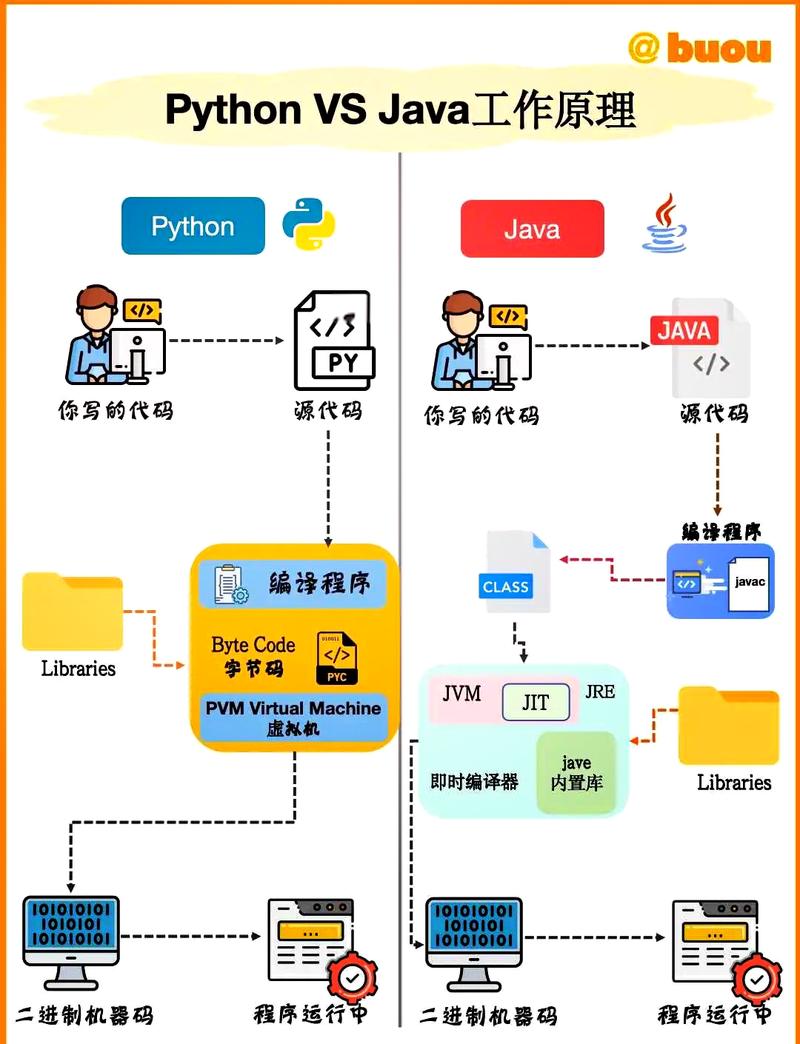
Here’s a detailed comparison of Clojure and Python, broken down by key characteristics.
At a Glance: The Core Difference
- Python: A multi-paradigm language (primarily Object-Oriented and Procedural) designed for readability, simplicity, and rapid development. Its philosophy emphasizes "There should be one-- and preferably only one --obvious way to do it." It's a general-purpose powerhouse with a massive ecosystem.
- Clojure: A modern Lisp dialect designed for concurrency, immutability, and robustness. Its philosophy emphasizes "Simple is easy, complex is hard." It runs on the Java Virtual Machine (JVM), the Common Language Runtime (CLR), and JavaScript (via ClojureScript), making it a uniquely portable language.
Detailed Comparison Table
| Feature | Clojure | Python |
|---|---|---|
| Philosophy | "Code as data," simplicity, immutability, functional-first. | "Readability counts," batteries-included, simplicity, practicality. |
| Paradigm | Primarily Functional. Encourages pure functions, immutable data, and treating code as data (macros). | Multi-paradigm. Object-Oriented, Procedural, and Functional support. The "Pythonic" way often blends OOP and procedural. |
| Syntax | S-expression-based. Data and code are written in nested lists (function arg1 arg2). Very concise but has a steep learning curve. |
Indentation-based. Uses whitespace to define code blocks. Familiar, readable, and easy to learn for most programmers. |
| Performance | Potentially very high. As a JVM language, it has access to the mature, highly optimized Java ecosystem. Can be slower than Java for CPU-bound tasks due to abstraction. | Good for most tasks. The standard CPython interpreter is slower than compiled languages. CPU-bound tasks often require libraries like NumPy, Cython, or PyPy. |
| Concurrency | A first-class citizen. Built on the strengths of the JVM's java.util.concurrent. Uses Software Transactional Memory (STM) and agents for safe, easy concurrent programming. |
GIL (Global Interpreter Lock). The standard CPython interpreter has a GIL, which allows only one thread to execute Python bytecode at a time. This limits true parallelism for CPU-bound tasks. Best for I/O-bound tasks (e.g., web scraping). |
| Ecosystem & Libraries | Smaller but powerful. Leverages the entire Java ecosystem (Maven/Leiningen) and JavaScript ecosystem (NPM). Excellent for data science (Incanter), web (Pedestal), and enterprise integration. | Massive and dominant. "The batteries-included" philosophy means it comes with a rich standard library. Unmatched libraries for Data Science (Pandas, NumPy, Scikit-learn), AI/ML (TensorFlow, PyTorch), and Web (Django, Flask). |
| Learning Curve | Steep. The S-expression syntax and functional concepts (immutability, STM) are a significant hurdle for newcomers. | Gentle. Consistent syntax and English-like keywords make it one of the easiest languages to learn, especially for beginners. |
| Typing | Dynamic by default. Clojure is a dynamically typed language. | Dynamic by default, with optional static typing (Type Hints/MyPy). This is a recent and increasingly popular feature, offering a best-of-both-worlds approach. |
| Tooling | Good, but often integrated with Java/Java tooling (e.g., Leiningen, Cursive IDE plugin). | Excellent. Mature and widely adopted tools like pip, virtualenv, pytest, and black (code formatter). |
| Best For | - Concurrency-heavy applications (e.g., financial systems, real-time analytics). - Web services with complex backend logic (e.g., using Pedestal). - Data pipelines and ETL processes. - Scripting for the JVM/Java ecosystem. |
- General-purpose scripting and automation. - Web development (backend and frontend with frameworks). - Data science, machine learning, and scientific computing. - Education and rapid prototyping. |
Key Differences Explained in Depth
Syntax: S-expressions vs. Indentation
This is the most immediate and visible difference.
-
Clojure: Everything is a list.
(defn greet [name]
  (str "Hello, " name "!"))
The
defnfunction takes three arguments: a name (greet), a vector of parameters ([name]), and the body ((str "Hello, " name "!")). This makes parsing extremely simple and allows for powerful macros that can transform code itself.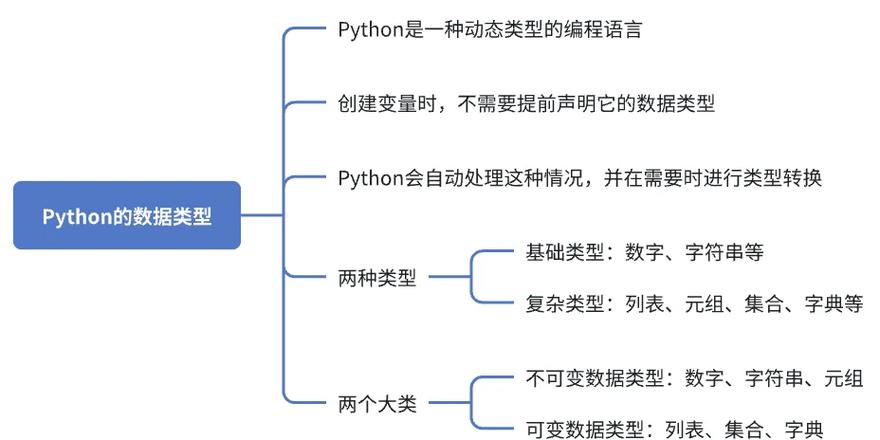 (图片来源网络,侵删)
 -
Python: Uses familiar, C-style syntax with indentation.
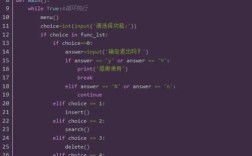
def greet(name):
    return f"Hello, {name}!"
This syntax is widely understood and praised for its readability, which is a core tenet of Python's design.
Concurrency: STM vs. GIL
This is where Clojure truly shines and Python shows its architectural limitation.
-
Clojure's Approach: Clojure encourages immutability. When you need to change data, you create a new version of it. For shared state that needs to be updated concurrently, it uses Software Transactional Memory (STM). You define a "transaction," and Clojure ensures it executes atomically and consistently, even if multiple threads are trying to modify data. This is often considered a much safer and more intuitive model than manual locking.
 (图片来源网络,侵删)
 -
Python's Approach: The Global Interpreter Lock (GIL) is a mutex that protects access to Python objects, preventing multiple native threads from executing Python bytecode at the same time. This means you can't achieve true parallelism for CPU-bound tasks using threads in the standard CPython interpreter. To get around this, you must use the
multiprocessingmodule, which creates separate processes, each with its own memory and Python interpreter. This is more resource-intensive and complex to manage.
Ecosystem: The JVM vs. The World
-
Clojure: Its superpower is interoperability. Because it runs on the JVM, you can seamlessly call any Java library. This gives it instant access to decades of mature, battle-tested enterprise software, high-performance libraries, and robust tooling. The downside is that managing Java dependencies (with Leiningen/Maven) can be more complex than Python's
pip. -
Python: Its ecosystem is vast and arguably the largest for any general-purpose language. If you want to do anything—web scraping, data analysis, machine learning, build a GUI—there's a high-quality, well-documented library for it. The Python Package Index (PyPI) is a cornerstone of its success.
When to Choose Which?
Choose Clojure if:
- Concurrency is your primary concern. If you are building a system that needs to handle many simultaneous requests or data streams safely and efficiently, Clojure's STM and immutable data structures are a huge advantage.
- You need robustness and reliability. The functional paradigm and immutability make code easier to reason about, test, and debug, leading to more stable applications.
- You work in a Java environment. You can leverage existing Java codebases and libraries while getting the benefits of a modern, expressive language.
- You love Lisp or want to learn a language with a unique, powerful macro system. Macros allow you to extend the language itself in ways that are impossible in Python.
Choose Python if:
- Rapid development and readability are key. Python's clear syntax and massive ecosystem allow you to build and deploy applications incredibly quickly.
- You're entering data science, machine learning, or AI. The ecosystem here (Pandas, Scikit-learn, TensorFlow, PyTorch) is unparalleled and the industry standard.
- You need to do web development. Frameworks like Django and Flask make it trivial to get a web server up and running.
- You are a beginner or work in a team with mixed skill levels. Python's gentle learning curve and consistent syntax make it accessible to almost everyone.
Conclusion
Neither language is "better" overall—they are tools for different jobs.
- Python is the versatile, approachable workhorse. It's the default choice for a vast range of problems, from simple scripts to complex AI systems, because of its simplicity and ecosystem.
- Clojure is the specialized, robust specialist. It's the go-to choice when the problem domain is complex, requires high concurrency, and demands long-term stability and maintainability, especially within the JVM ecosystem.
The choice ultimately depends on your specific project requirements, your team's expertise, and the problems you are trying to solve.