Of course! In Java, loadClass is a fundamental method for dynamically loading classes at runtime. It's a core part of the Java ClassLoader mechanism.
Let's break it down, from the high-level concept to the detailed method signature and practical examples.
The Big Picture: What is a ClassLoader?
In Java, a ClassLoader is responsible for loading Java classes into the Java Virtual Machine (JVM). When you write new MyObject() or call MyClass.class, the JVM uses a classloader to find the compiled .class file, read its binary data, and create a Class object that represents it.
There are three built-in classloaders in the standard JVM hierarchy:
- Bootstrap ClassLoader: The topmost loader. It's written in native code (not Java) and is responsible for loading core JDK classes (like
java.lang.String,java.io.File, etc.) from thert.jar(or similar) file. It has no parent. - Extension ClassLoader (or Platform ClassLoader): Loads classes from the JDK extension directories (
$JAVA_HOME/jre/lib/ext). It's a child of the Bootstrap loader. - Application ClassLoader (or System ClassLoader): This is the one you'll interact with most often. It loads classes from the application's classpath, including your own code and libraries. It's a child of the Extension loader.
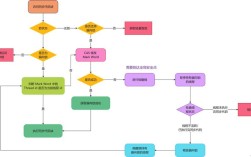
Delegation Model: When a classloader is asked to load a class, it first delegates the request to its parent classloader. This continues up the hierarchy until the Bootstrap loader is reached. If the parent cannot find the class, the child loader then tries to find it itself. This prevents duplicate classes and ensures that core Java classes are always used.
The loadClass Method Signature
The loadClass method is defined in the java.lang.ClassLoader class. The most common signature you'll use is:
protected Class<?> loadClass(String name, boolean resolve) throws ClassNotFoundException
Parameters:
String name: The fully qualified name of the class you want to load (e.g.,"com.example.MyUtils"). Note that this uses dots () as separators, not slashes ().boolean resolve: A flag that indicates whether the loaded class should be resolved.- If
true, the classloader will not only load the class but also resolve all of its symbolic references (e.g., references to other classes, methods, or fields). This is a more expensive operation. - If
false, the class is loaded but not resolved. The JVM will resolve it later when it's actually needed (e.g., when you create a new instance). This is the default behavior for most scenarios.
- If
Return Value:
Class<?>: Returns aClassobject representing the loaded class. This object is the "gateway" to the class's metadata (methods, fields, etc.).
Exception:
ClassNotFoundException: Thrown if the classloader or its parents cannot find the class with the specified name.
How loadClass Works (The Delegation Model in Action)
Here's the step-by-step logic a typical loadClass implementation follows:
- Check Cache: First, it checks if the class has already been loaded. It looks in the internal cache of the classloader and its ancestors. If found, it returns the cached
Classobject immediately. This is a crucial performance optimization. - Delegate to Parent: If the class is not in the cache, it calls the
loadClassmethod of its parent classloader. - Parent Loads or Delegates Further: The parent repeats the process (checking its cache, then delegating to its parent). This chain continues up to the Bootstrap ClassLoader.
- Bootstrap Loader Tries: The Bootstrap loader tries to find the class (e.g.,
java.lang.Object). If it finds it, it returns theClassobject, and the process unwinds back down the hierarchy, caching the class along the way. - Child Loader Finds the Class: If the Bootstrap loader (and all other ancestors) cannot find the class, the original child loader that received the request gets its turn.
- Find Class Locally: The child loader tries to find the class itself. For the
Application ClassLoader, this means searching the classpath (directories, JAR files, etc.). For a custom classloader, this is where you define your custom logic (e.g., loading from a network, a database, or a specific file). - Define the Class: If the class file is found, the loader calls the
defineClassmethod, which parses the raw byte array of the.classfile and creates theClassobject. - Resolve (if requested): If the
resolveparameter wastrue, the loader then calls theresolveClassmethod on the newly createdClassobject to resolve its symbolic references. - Return the Class: Finally, the
Classobject is returned.
Practical Example: Creating a Custom ClassLoader
The most common reason to use loadClass directly is when you create a custom classloader. Let's build a simple one that loads classes from a specific directory on our local filesystem.
Step 1: Create a "Plugin" Class
This is a simple class we will compile and place in a special directory. Our custom loader will find it there.

src/com/example/Plugin.java
package com.example;
public class Plugin {
    public void run() {
        System.out.println("Hello from the dynamically loaded Plugin!");
    }
}
Step 2: Compile the Plugin Class
Compile this class and place its .class file in a directory, for example, ./plugins/com/example/.
# Compile the source
mkdir -p ./plugins/com/example/
javac -d ./plugins src/com/example/Plugin.java
This will create the file ./plugins/com/example/Plugin.class.
Step 3: Create the Custom ClassLoader
This classloader will look for .class files in the ./plugins directory.
src/MyCustomClassLoader.java
import java.io.ByteArrayOutputStream;
import java.io.IOException;
import java.io.InputStream;
import java.nio.file.Files;
import java.nio.file.Path;
import java.nio.file.Paths;
public class MyCustomClassLoader extends ClassLoader {
    // The base directory where our "plugins" are located
    private final String baseDir;
    public MyCustomClassLoader(String baseDir) {
        // The parent classloader is set to the system classloader by default
        super();
        this.baseDir = baseDir;
    }
    @Override
    protected Class<?> findClass(String name) throws ClassNotFoundException {
        // 1. Convert the class name (e.g., com.example.Plugin) to a file path
        //    (e.g., com/example/Plugin.class)
        String path = name.replace('.', '/').concat(".class");
        Path fullPath = Paths.get(baseDir, path);
        // 2. Read the class file into a byte array
        try (InputStream is = Files.newInputStream(fullPath);
             ByteArrayOutputStream bos = new ByteArrayOutputStream()) {
            byte[] buffer = new byte[1024];
            int bytesRead;
            while ((bytesRead = is.read(buffer)) != -1) {
                bos.write(buffer, 0, bytesRead);
            }
            byte[] classBytes = bos.toByteArray();
            // 3. Define the class using the defineClass method
            return defineClass(name, classBytes, 0, classBytes.length);
        } catch (IOException e) {
            throw new ClassNotFoundException("Could not load class " + name, e);
        }
    }
}
Step 4: Use the Custom ClassLoader
Now, let's write a main method to load and use our Plugin class.
src/Main.java
public class Main {
    public static void main(String[] args) throws Exception {
        // The directory where our custom loader will look for classes
        String pluginDir = "./plugins";
        // Create an instance of our custom classloader
        MyCustomClassLoader loader = new MyCustomClassLoader(pluginDir);
        // Use the loader's loadClass method to load the class
        // Note: We use false for resolve, as it's not strictly necessary for this simple example.
        Class<?> pluginClass = loader.loadClass("com.example.Plugin");
        // Now that we have the Class object, we can create an instance and call its methods
        // We use newInstance() for simplicity (though reflection is more robust)
        Object pluginInstance = pluginClass.getDeclaredConstructor().newInstance();
        // Check if the instance is of the correct type
        if (pluginInstance instanceof com.example.Plugin) {
            com.example.Plugin myPlugin = (com.example.Plugin) pluginInstance;
            myPlugin.run();
        }
        // Let's see which classloader loaded our class
        System.out.println("Plugin class loaded by: " + pluginClass.getClassLoader());
        System.out.println("Main class loaded by: " + Main.class.getClassLoader());
    }
}
Step 5: Run the Example
Compile and run everything from the root directory.
# Compile the main class and the custom loader
javac -d . src/Main.java src/MyCustomClassLoader.java
# Run the main class
java Main
Expected Output:
Hello from the dynamically loaded Plugin!
Plugin class loaded by: MyCustomClassLoader@...
Main class loaded by: jdk.internal.loader.ClassLoaders$AppClassLoader@...
Notice that Plugin was loaded by our custom MyCustomClassLoader, while Main was loaded by the standard AppClassLoader. This demonstrates the power of dynamic loading.
loadClass vs. Class.forName
You'll often see Class.forName() used for loading classes. How is it different?
| Feature | ClassLoader.loadClass(name, resolve) |
Class.forName(name) |
|---|---|---|
| Source | Instance method of ClassLoader |
Static method of Class |
| Usage | Explicitly uses a specific classloader. | Uses the context classloader by default (usually the AppClassLoader). |
| Behavior | Follows the standard parent-delegation model. | Internally, it calls contextClassLoader.loadClass(name, true). The resolve parameter is always true. |
| Common Use | When you need to load a class from a non-standard location (network, custom path) or want to control which loader is used. | The standard way to load a class when you expect it to be on the classpath (e.g., for JDBC drivers, JPA providers, or reflection). |
Key Takeaway: Use Class.forName() for standard classpath loading. Use ClassLoader.loadClass() when you need fine-grained control over the loading process, especially with custom classloaders.