Of course! "Python everything" is a fantastic goal. Python's motto is "batteries included," and it's true. It can be used for almost anything.
Let's break down "everything" into Python's core strengths, key applications, and how to get started.
The Philosophy: Why Python is "Everything"
Before we dive into what you can do with Python, it's helpful to understand why it's so versatile.
- Simple and Readable: Its syntax is clean and often looks like plain English. This makes it a fantastic first language for beginners and allows for rapid development.
- Interpreted Language: You don't need to compile your code. You can run it directly, which speeds up the development and debugging cycle.
- Huge Ecosystem of Libraries: This is Python's superpower. Whatever you want to do, there's almost certainly a library for it. A library is a pre-written collection of code that you can use to make your life easier.
- Cross-Platform: Python code runs on Windows, macOS, and Linux without any changes.
- Strong Community Support: If you get stuck, a quick search will likely lead you to a Stack Overflow answer, a tutorial, or a documentation page.
The "Everything" Breakdown: Key Areas of Application
Here’s a tour of the most common and powerful things you can do with Python.
A. Web Development
This is one of Python's most popular domains. You can build anything from a simple personal blog to complex, data-driven web applications.
- Frameworks: These are toolkits that provide the structure and boilerplate for your website.
- Django: A high-level, "batteries-included" framework. It's great for building large, robust applications quickly. It handles database interactions, user authentication, and admin panels out of the box.
- Flask: A micro-framework. It's lightweight and gives you more control. You start with the basics and add only the components you need, making it perfect for smaller projects or APIs.
- Example Projects: E-commerce sites, social media platforms, content management systems (CMS), RESTful APIs.
B. Data Science & Analytics
Python is the undisputed king of data science. It has become the standard language for anyone working with data.
- Libraries:
- Pandas: The go-to library for data manipulation and analysis. It lets you easily read, clean, filter, and transform data from sources like CSV files, Excel spreadsheets, and SQL databases.
- NumPy: The fundamental package for numerical computing in Python. It provides powerful tools for working with arrays and matrices of numbers.
- Matplotlib & Seaborn: Essential for data visualization. You can create static, interactive, and publication-quality charts, graphs, and plots to understand your data better.
- Example Projects: Analyzing sales trends, building financial models, cleaning messy datasets from the web.
C. Machine Learning & Artificial Intelligence
Building on its data science capabilities, Python is the primary language for machine learning.
- Libraries:
- Scikit-learn: The best starting point for traditional machine learning. It provides simple and efficient tools for data mining and data analysis, including classification, regression, and clustering algorithms.
- TensorFlow & PyTorch: These are the two dominant libraries for deep learning (a subfield of ML focused on neural networks). They are used to build complex models for image recognition, natural language processing (NLP), and more.
- Example Projects: Image classification (identifying objects in a photo), spam detection in emails, recommendation engines (like Netflix or Amazon), chatbots.
D. Automation & Scripting
This is where Python shines for solving small, repetitive tasks, making it a favorite among system administrators and developers.
- Use Cases:
- File Management: Renaming hundreds of files, moving files from one folder to another based on a rule, searching for text inside documents.
- Web Scraping: Automatically extracting information from websites. Libraries like Beautiful Soup and Scrapy make this easy.
- Task Automation: Sending emails on a schedule, interacting with APIs to pull data, or automating mouse and keyboard actions with PyAutoGUI.
- Example Projects: A script that backs up your photos to an external drive every week, a bot that checks a product's price and emails you when it drops.
E. Software Development & APIs
Python is used to build the "backend" of applications—the server-side logic that users don't see directly.
- What it does: Handles user authentication, manages databases, processes requests, and communicates with other services.
- Key Concepts: RESTful APIs (Application Programming Interfaces) are a common way for different applications to talk to each other. Python is excellent for building the servers that provide these APIs.
- Example Projects: The backend for a mobile app, a service that processes payments, a data pipeline that feeds information to a dashboard.
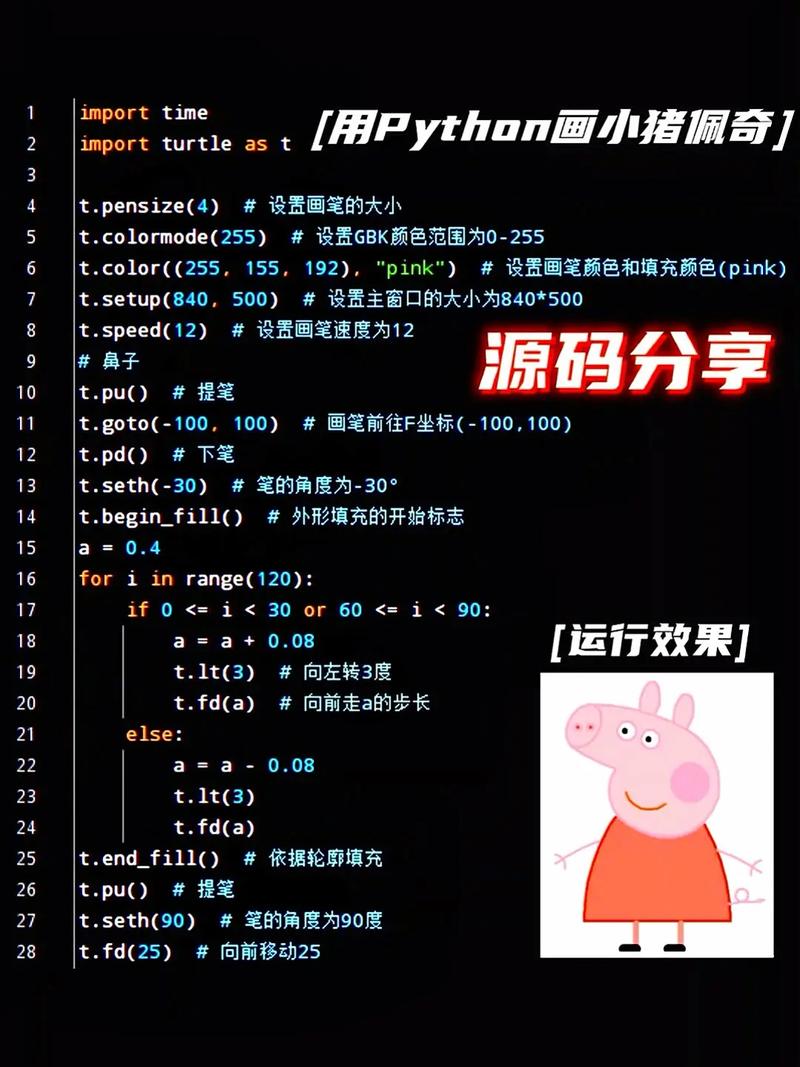
F. Game Development
While not as dominant as C++ for AAA titles, Python is a great choice for 2D games and for learning game development concepts.
- Libraries:
- Pygame: A set of Python modules designed for writing video games. It's perfect for beginners and great for creating 2D arcade-style games.
- Panda3D: A more advanced, powerful 3D engine.
- Example Projects: A platformer like Super Mario, a puzzle game, a simple RPG.
G. Desktop GUI (Graphical User Interface) Applications
You can build fully-featured desktop applications with Python.
- Libraries:
- Tkinter: Comes built-in with Python. It's simple to use and great for creating basic windows, buttons, and text boxes.
- PyQt / PySide: More powerful and professional toolkits for creating complex desktop applications that look and feel native to the operating system.
- Example Projects: A calculator app, a media player, a data visualization tool with its own window.
How to Get Started: Your "Python Everything" Path
Here’s a practical roadmap to becoming a Python developer.
Step 1: Learn the Fundamentals
Before you can build "everything," you need a solid foundation. Focus on these core concepts:
- Variables and Data Types (strings, numbers, booleans)
- Data Structures (Lists, Dictionaries, Tuples, Sets)
- Control Flow (if/else statements, loops)
- Functions
- Basic Error Handling (try/except blocks)
Resources: Codecademy, Automate the Boring Stuff with Python (free online book), freeCodeCamp.
Step 2: Choose Your First "Everything" Project
Don't just do tutorials. Build something small and concrete to solidify your knowledge.
- For Automation: A script that organizes your downloads folder.
- For Web Dev: A simple "To-Do List" web app using Flask.
- For Data Analysis: A script that reads a CSV of your expenses and generates a pie chart of your spending.
Step 3: Install Essential Tools
- Python: Download it from python.org.
- A Code Editor: Visual Studio Code (VS Code) is the most popular choice. It's free, powerful, and has excellent Python support.
- A Virtual Environment: This is crucial. It isolates your project's dependencies (libraries) from other projects. Use the built-in
venvmodule.
Step 4: Explore the Ecosystem
Start using pip (Python's package installer) to download libraries.
# To install a library
pip install pandas
pip install requests
pip install pygame
Step 5: Specialize
Once you're comfortable with the basics, pick an area that interests you most and dive deeper. Read the documentation for the key libraries in that field, take more advanced courses, and build more complex projects.
The Python Ecosystem: The "Batteries"
Here is a non-exhaustive list of famous libraries to give you a taste of the ecosystem:
| Category | Key Libraries | What they do |
|---|---|---|
| Web Frameworks | Django, Flask, FastAPI | Build websites and web services. |
| Data Science | Pandas, NumPy | Manipulate and analyze numerical data. |
| Visualization | Matplotlib, Seaborn, Plotly | Create charts, graphs, and interactive plots. |
| Machine Learning | Scikit-learn, TensorFlow, PyTorch | Build predictive models and AI systems. |
| Automation | Requests, BeautifulSoup, Selenium | Scrape websites, automate browser tasks. |
| Testing | Pytest, unittest | Write tests to ensure your code works correctly. |
| DevOps & Cloud | Ansible, Boto3 | Automate server management and interact with AWS. |
| GUI | Tkinter, PyQt | Build desktop applications. |
| Game Dev | Pygame, Panda3D | Create 2D and 3D games. |
Conclusion
"Python everything" is not an exaggeration. It's a versatile, powerful, and beginner-friendly language that can take you from writing simple scripts to building complex, world-changing applications.
The key is to start with the fundamentals, build small projects, and then follow your curiosity into one of the many exciting fields Python has to offer. Happy coding